You pick the eleven. The rest is football.
Create your own club and play online against other managers. Build a squad for the football you want to play, prepare each match, watch it unfold and develop the club season after season.
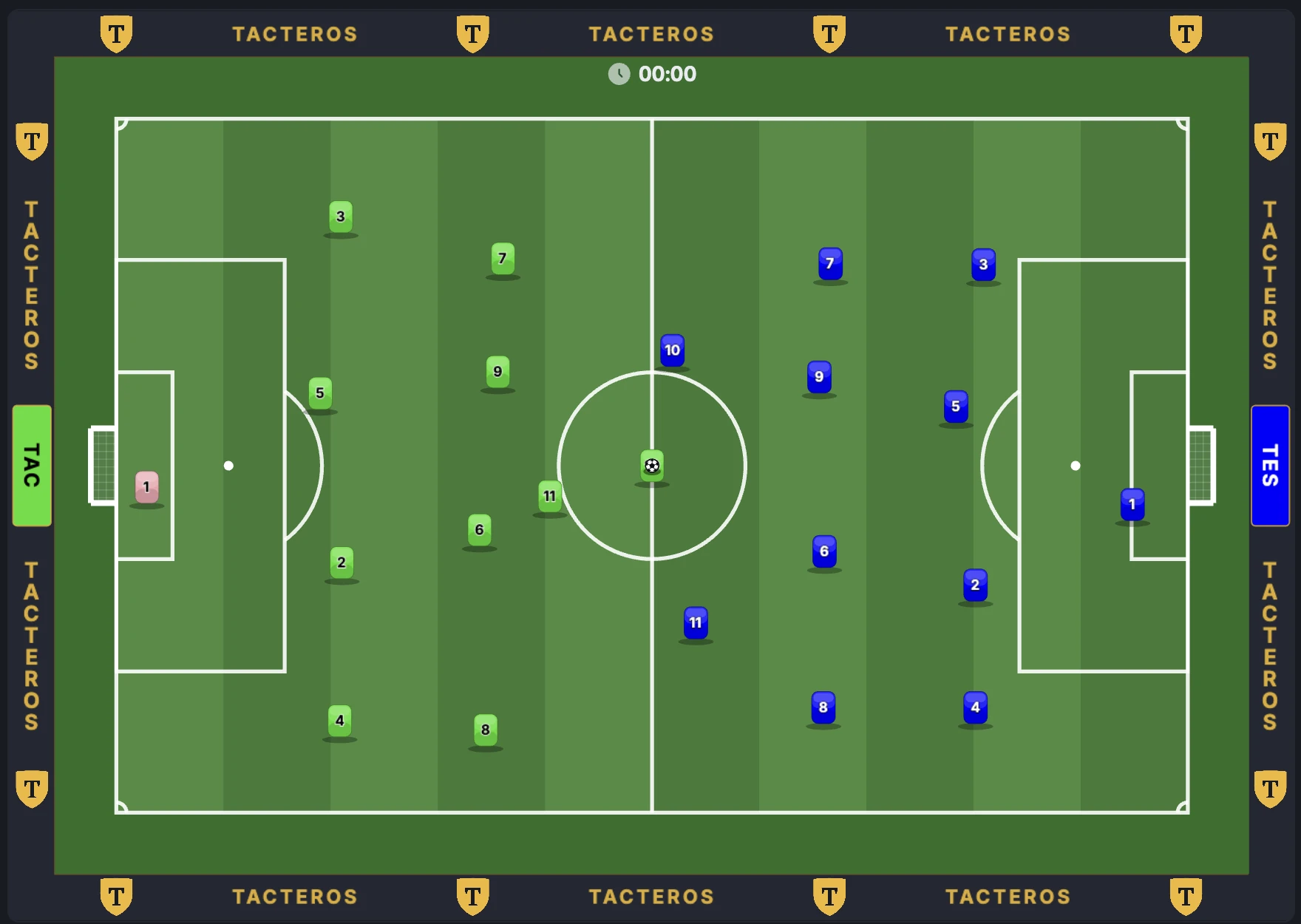
Manage a squad, not a card collection
The important calls are yours: shape the squad, pick the eleven and decide how the team should play. Tacteros is about preparing the side, not controlling one player with a gamepad.
-
Shape the squad
Recruit and develop players who suit your plans. A long season needs more than one strong eleven.
-
Prepare for the match
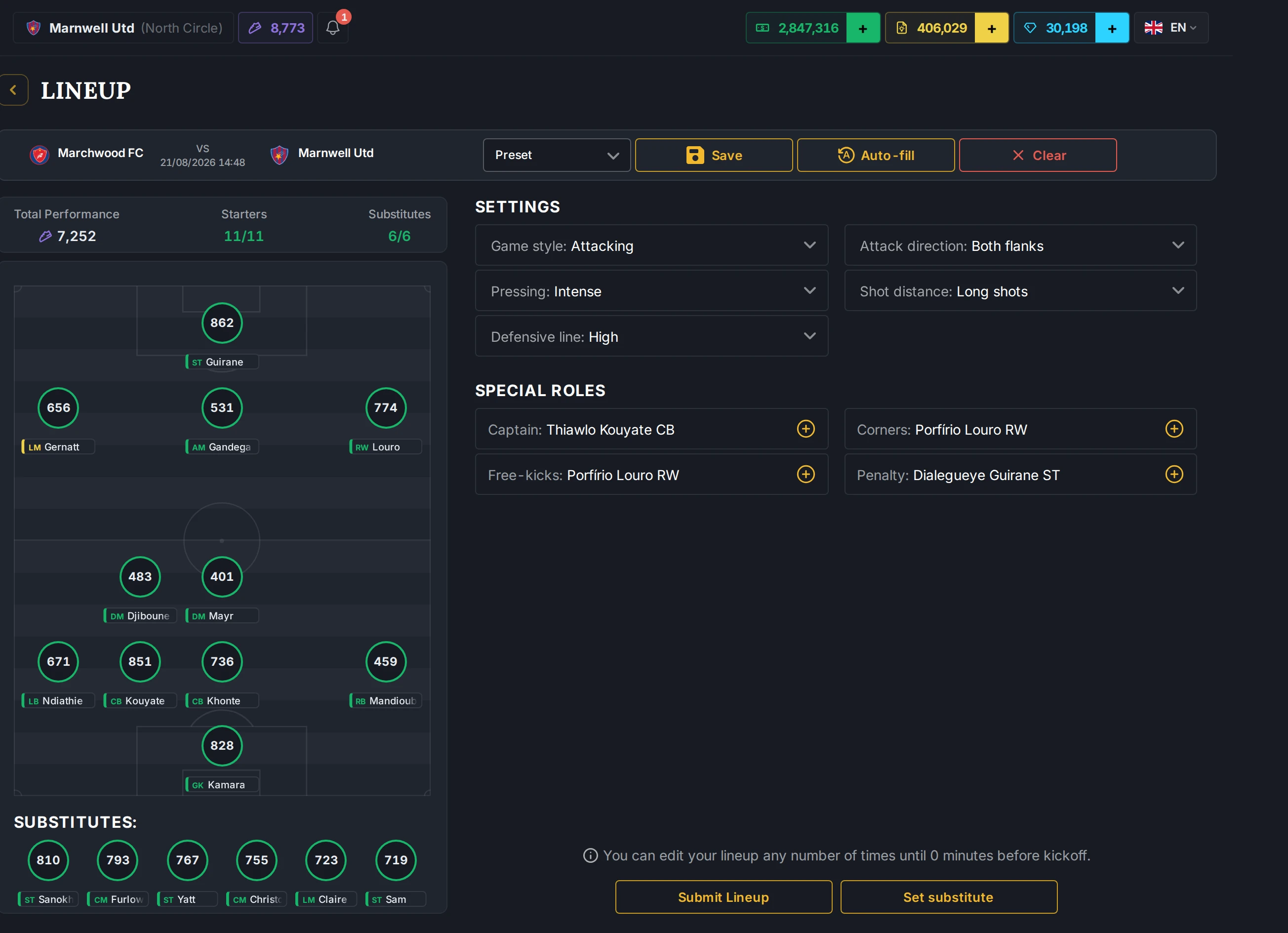
Set the formation and game style. Pressing, shooting range and defensive line change how the side approaches the game.
-
Set the plan
Pick the starting eleven and bench, then name the captain and set-piece takers. A planned substitution combines a minute with the match situation you choose.
-
Manage the calendar
High pressing costs more energy. Cup runs can add a second official match to the same day, and a deeper run demands better rotation.
A clear start in 22 quests
Twenty-two onboarding quests introduce the core mechanics of Tacteros and give a new club its first useful resources: Balance, Scout Points and Gems. Their rewards give you room to make meaningful early decisions about the squad and the club.
Starting resources
- Balance
- Scout Points
- Gems
All 22 are available from the start and can be completed in any order. Once a quest is complete, you can claim its reward whenever you want.
Every player is a decision
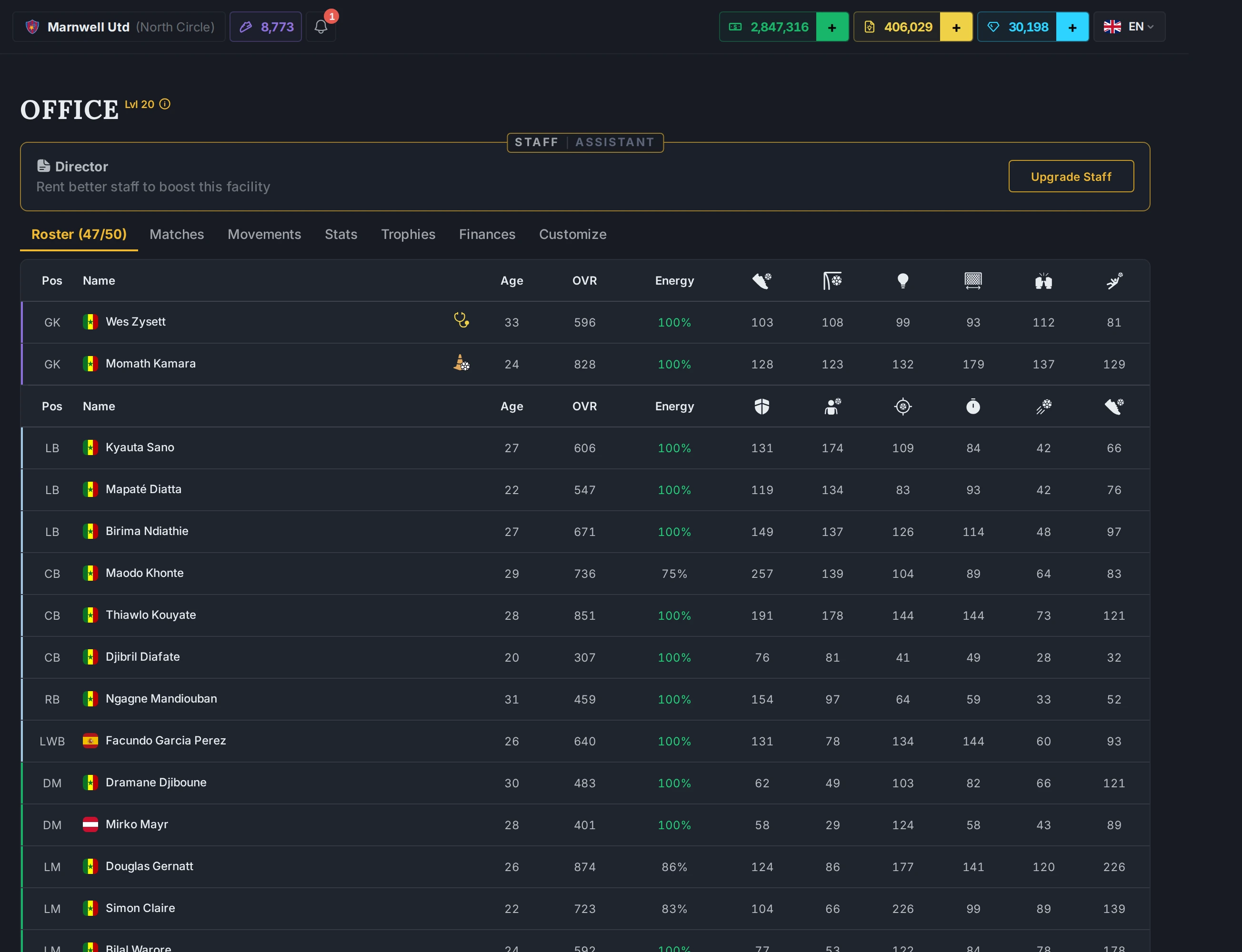
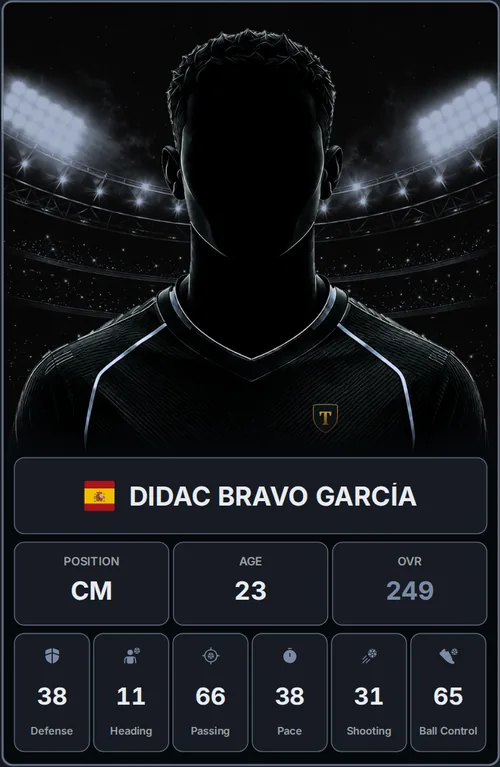
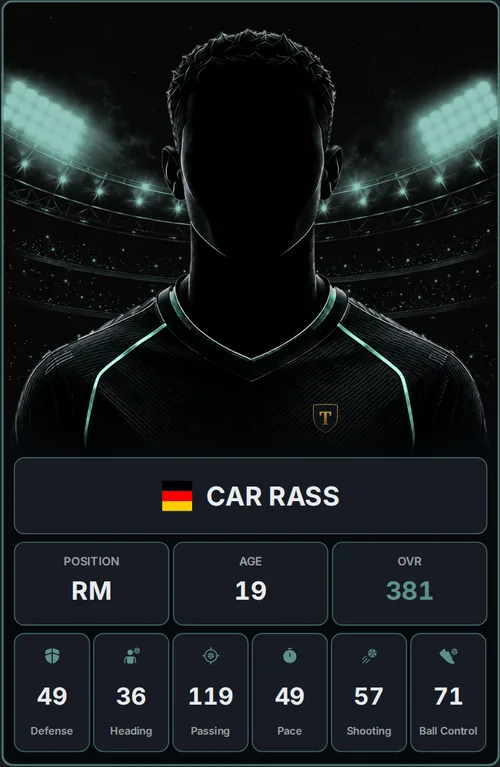
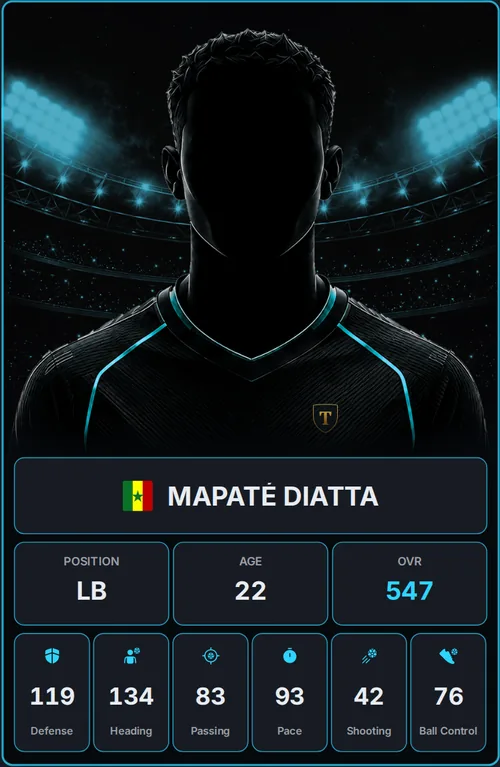
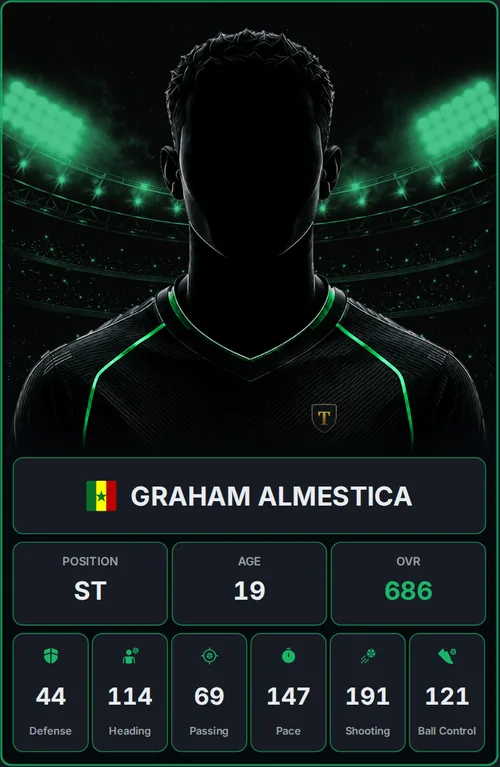
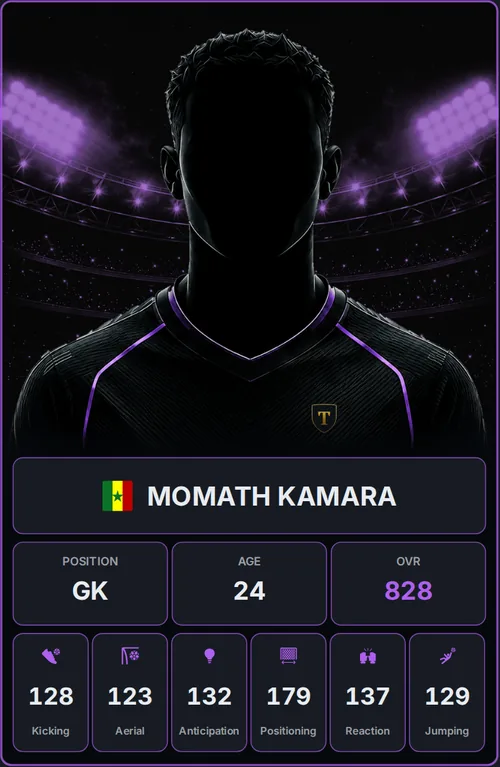
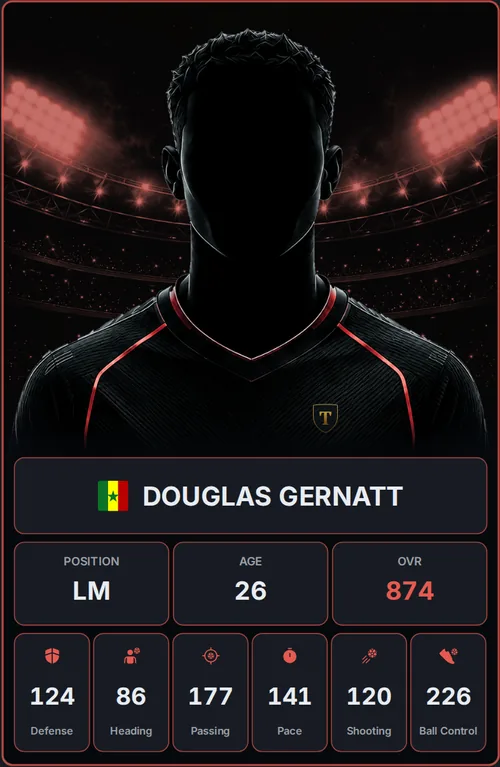
Six skills describe the different parts of a player's football ability. Their total is his OVR, up to 999, and his OVR range sets the card colour.
Position, age, current energy and market value complete the picture. OVR XI measures squad strength by adding the best goalkeeper to the ten best outfield players. Tired players can leave an official match squad short, so readiness across a dense calendar depends on recovery, rotation and depth rather than one strong eleven.
The score is not decided in advance
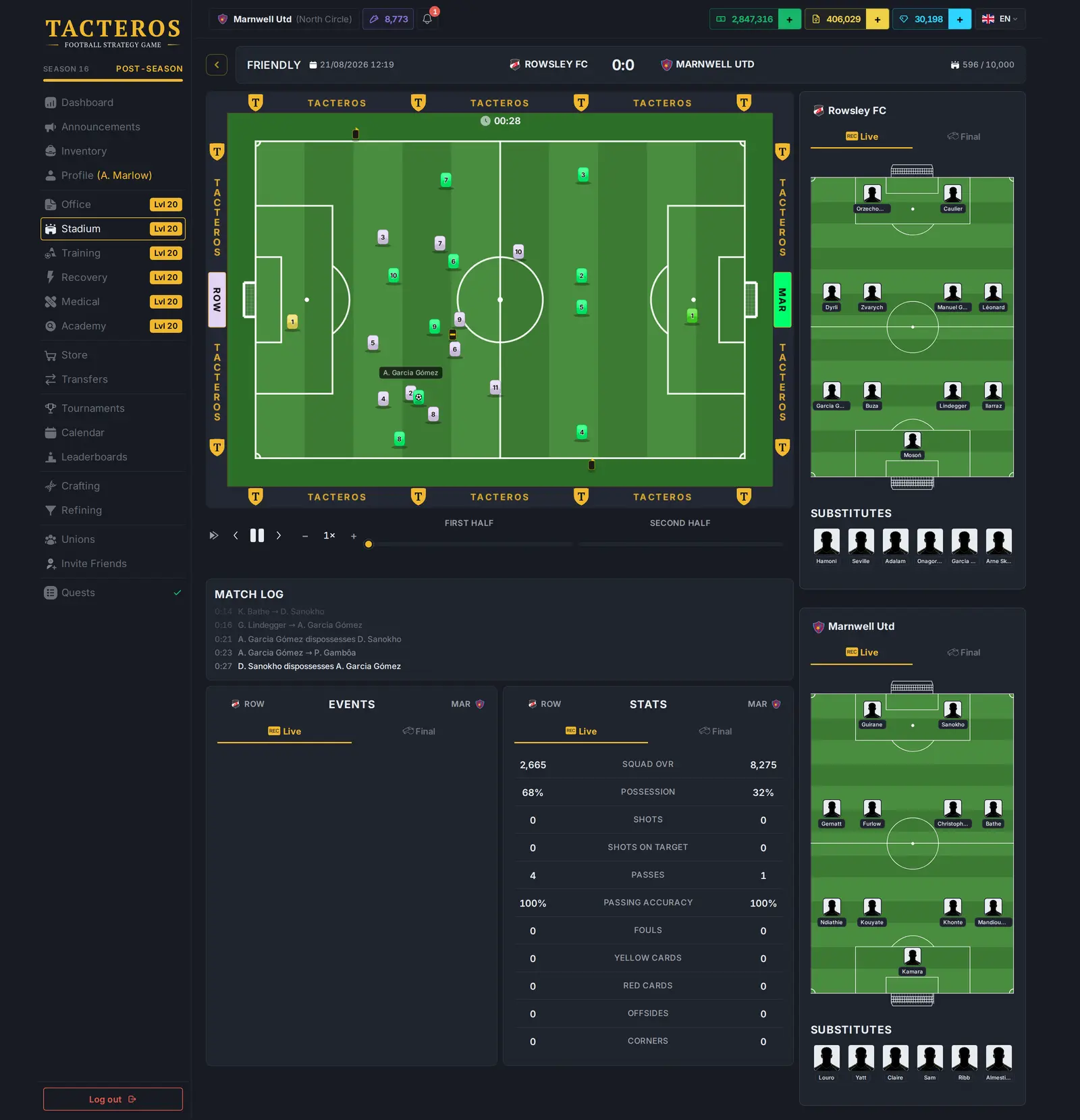
You prepare the side; you do not steer the players once the match begins. Tacteros then resolves the contest from kick-off to full time instead of choosing a final score and animating it afterwards. Players react to the situation in front of them, and the ball changes course only after an action or physical contact. Chance still affects individual actions, so the result remains open until the final whistle.
Your preparation changes the contest. Game style shifts the balance between defence and attack; pressing changes how quickly opponents are closed down; shooting range and defensive line shape where the side takes its risks.
Watch the full action on the pitch, or follow the match log and key events minute by minute.
The club is a business
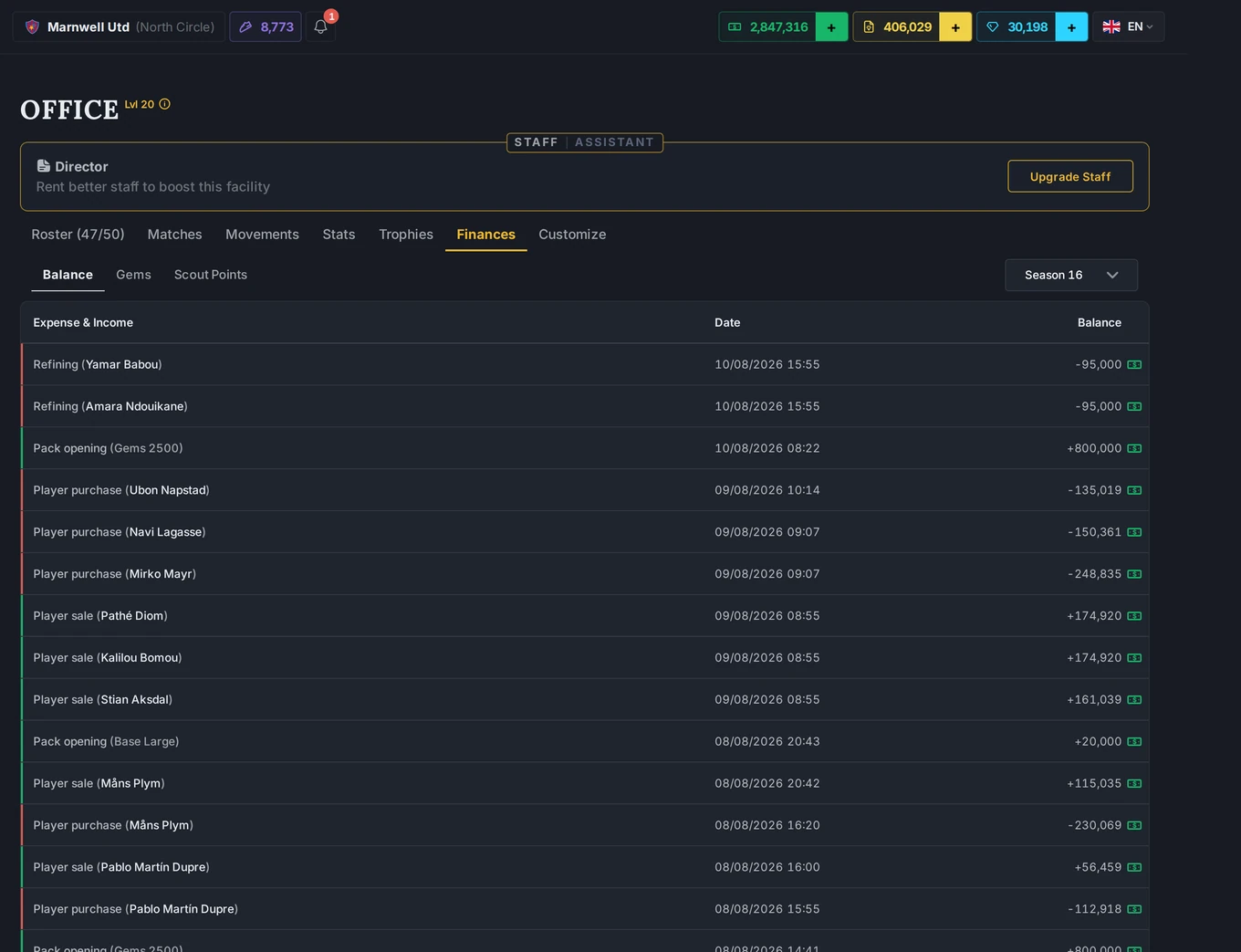
Football management continues between fixtures. Players, salaries, rented staff, infrastructure and other running costs all compete for the same resources. Spending heavily in one area leaves less room elsewhere, but the priorities remain yours.
-
Build the infrastructure
The Stadium, Office, Training Centre, Recovery Centre, Medical Centre and Youth Academy each have twenty levels. Upgrades take investment, so priorities matter.
-
Rent the specialists you need
A coach, doctor, physio, scout, director and groundsman each improve a different part of the club. Stronger staff cost more, so the right mix depends on what the club needs and what it can afford.
-
Choose the trade-off
Official matches bring club income; salaries and facilities create recurring costs, while transfers and staff rentals require further spending. A new player now may mean waiting longer for the next infrastructure upgrade.
From the Rookie League to Elite
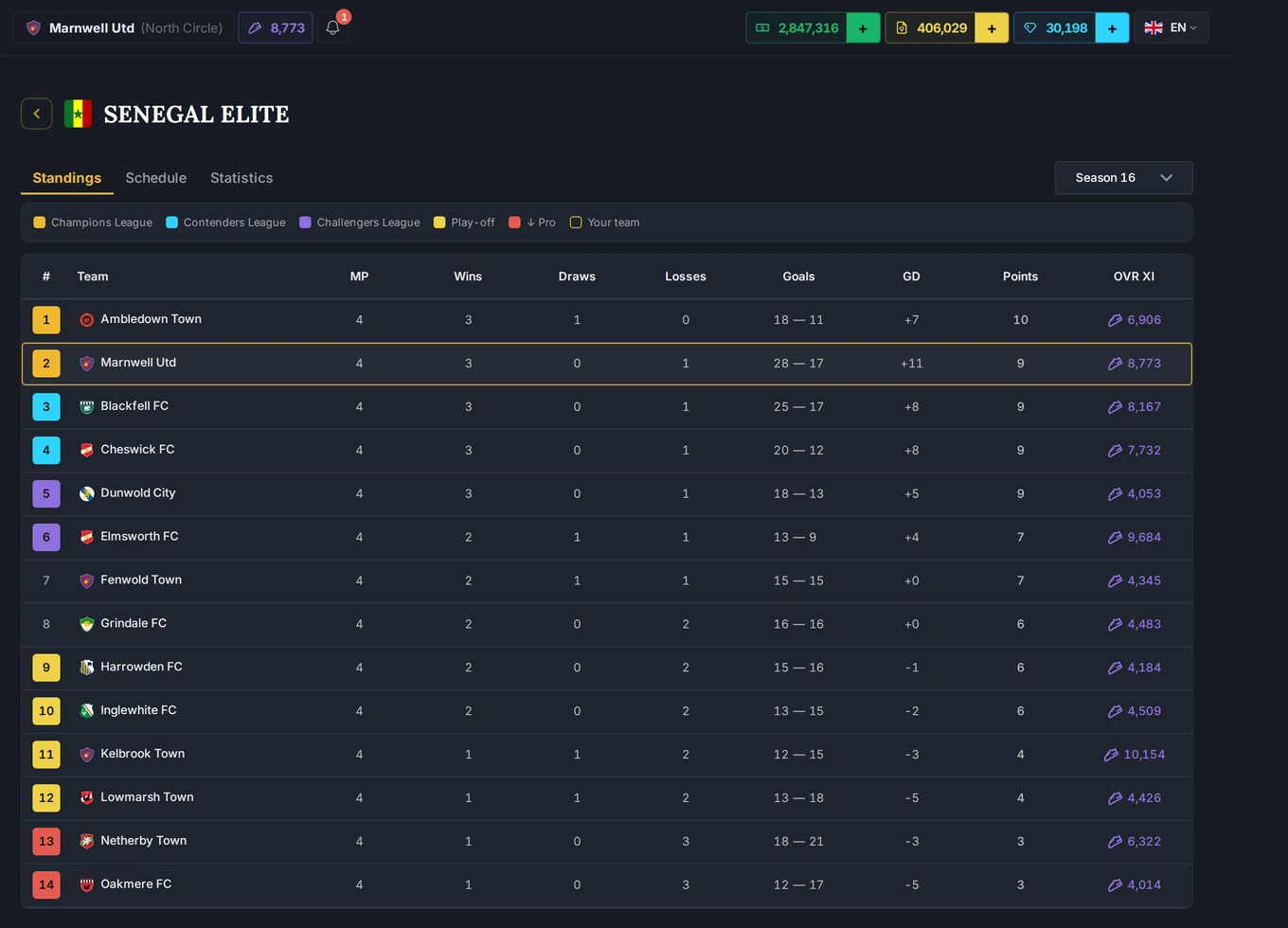
Every new club can register for the Rookie League, an open competition where many clubs share one table. Join while a season is running and the club enters the next available Game Day draw. Before each Game Day, that draw selects the next opponent from the shared table; after the opening draw, it first looks near the club’s current place in the standings. There is no 14-club division to fill before you can start.
The best Rookie League clubs earn a place in Amateur. The strongest Amateur clubs rise to Pro, and the strongest in Pro reach Elite. Starting from zero, the top of Tacteros can be only a few successful seasons away: the journey is measured in months, without dozens of divisions or years of mandatory waiting. Every step still has to be earned on the pitch.
- Elite32 divisions 448 clubs
- Pro64 divisions 896 clubs
- Amateur128 divisions 1,792 clubs
- Rookie League You start hereOpen table Join during season
A new season, a different field
The Rookie League runs for 26 Game Days as one Swiss-style competition with a new draw for each round. Amateur, Pro and Elite are different: every national division has fourteen clubs, and each club meets the other thirteen twice across 26 regular championship Game Days. Direct places and two-legged play-offs decide movement between levels.
After promotion and relegation are settled, horizontal rotation rebuilds the divisions within each level. A club may be placed in a division based in another country, because the country belongs to the division, not to the club. The draw spreads strength, breaks up a permanent division of death and brings different opponents, keeping the next season open without promising anyone an easy title.
Clubs that qualify for and advance in cup competitions can face a busier official calendar. A championship match and a National Cup or international cup tie can fall on the same day, leaving two official matches for the squad to cover.
- 14
- clubs in every national division
- 26
- regular championship Game Days
- ~1
- month per season
The league is not the only route to a trophy
Only the top six in each Elite division qualify for an international cup in the following season. Fame reflects a club’s sporting results over its last three played seasons, with more recent results carrying more weight. It determines National Cup entry, seeding and most home assignments, shapes Stadium attendance, orders clubs entering a tier during horizontal rotation and sets the club’s place in Top Clubs (Fame) on the Leaderboards.
-

Champions League
Qualification requires first or second place in an Elite division.
-

Contenders League
Elite clubs finishing third or fourth qualify for this international cup.
-

Challengers League
Fifth and sixth in Elite qualify for the third international competition.
-

The National Cup
Amateur and Pro clubs compete beside Elite sides for a major knockout trophy. Fame selects 96 of each country’s 98 eligible clubs.
Play free. Build at your own pace
You can create a football club and play its matches for free. Paying is optional. Gems are the premium resource used to speed up development and access current paid options. Tacteros may also offer paid packs with clearly specified content; a pack may include Gems, Balance, Scout Points, players or other listed items, depending on the offer.
Enter the gameNothing you pay for is randomised.
Common questions
-
What kind of football game is Tacteros?
Tacteros is an online football strategy game for people who want to run a club rather than control the players directly. You play in the browser as the football manager: build the squad, prepare matches, handle transfers and staff, and develop the club across seasons.
-
Can I play for free?
Yes. You can create a club and play its matches for free. Optional purchases can bring listed resources or players forward; before payment, you see exactly what you receive.
-
Do I need to install anything?
No. You can play Tacteros online in a desktop or mobile browser, with nothing to install.
-
How much control do I have before kick-off?
You decide who plays and how much risk the side takes. Formation, selection and the tactical approach affect where the team presses, defends and looks for shots. For each planned substitution, you choose a minute and may add a match-state condition such as winning, losing, not winning or not losing. Those choices influence the contest, but do not preselect the result.
-
Can I watch the matches?
Yes. After you prepare the team, every match has a visual replay of the action on the pitch, plus a log and key events by minute. You do not control players live; the replay shows how the prepared side and the match engine resolved the contest, with the score still open until the final whistle.
-
How busy is the fixture list?
The Rookie League has 26 Game Days and admits a new club to the next draw that is still open. Amateur, Pro and Elite have 26 regular championship Game Days, with two-legged transition play-offs for qualifying places. National Cup and, for the Elite top six, next-season international fixtures can run alongside the championship, so a club may play twice on the same day.
-
What are friendlies for?
A friendly is a tactical laboratory: test a lineup or instruction and learn how the simulation responds without risking an official result. Friendlies use no energy, cause no injuries, develop no players, pay no club income and do not affect competitive statistics.
-
How does training affect match preparation?
The Training Centre develops the player skill you select, and a better Coach increases the gain. Training also consumes energy, so frequent sessions require more rest or time in the Recovery Centre before important matches.
-
How do transfers work?
New players enter auctions run by Tacteros, and managers bid for them; there is no direct seller market between managers. Quicksell releases one of your players immediately and returns part of his base value: 80% on the first sale of the season, five percentage points less for each later sale, with a 50% floor.
-
What if I am away for a few matches?
The club still plays every official fixture. Without your lineup, the game selects an automatic 4-4-2 with default tactics, randomly assigns the captain and each set-piece taker, makes no planned substitutions and applies a 15% strength reduction. A lineup and match plan prepared by the manager are therefore more effective than the fallback.
More about Tacteros
-
Official Player Guide
Find the detailed rules for every current Tacteros mechanic, from the first club decision to the full competition calendar.
-
Blog
Coming soonGame news and updates from the Tacteros team.
Start your club
Play online, build the squad and see how far you can take your own club over many seasons.
Enter the game